


News reviewed: 4 October 2026. This article combines reported developments with a practical property-selection framework.
Image note: photographs are illustrative industrial-property images from the Factory-Shop.my media library, not photographs of the investment projects reported in this article.
Johor’s latest investment figures give businesses a reason to review their factory requirements. They do not tell a buyer which building will work for a particular production line, or tell a landlord what rent a tenant will accept. For manufacturers, suppliers and SME owners, the useful question is how the investment pipeline connects to an actual operating requirement.
Key takeaways
- Johor recorded RM59.4 billion in approved investments in the first half of 2026, according to MIDA.
- Approval figures cover more than factory purchases and should not be treated as completed projects or property transactions.
- Shortlist buildings by the occupier’s activity, access, utilities and available move-in date.
- Keep established Johor locations in the comparison instead of selecting solely on a regional headline.
In this article: Latest developments · Factory selection · Viewing checklist · FAQs
What the latest investment news says
On 28 August 2026, the Malaysian Investment Development Authority (MIDA) reported RM218.5 billion in approved investments nationwide for January–June 2026. That was an 11.7% increase from the corresponding period in 2025. Johor accounted for RM59.4 billion, while Malaysia’s manufacturing sector recorded RM51.3 billion. These are different measures: the Johor total is a state figure across sectors, while the manufacturing figure is nationwide. MIDA’s first-half investment release.
MIDA’s follow-up commentary on 25 September highlighted the importance of industrial capabilities and local participation alongside investment totals. MIDA’s September analysis.
The Johor–Singapore Special Economic Zone (JS-SEZ) is part of the regional context. However, the state-wide approval figure is not a count of JS-SEZ tenants searching for ready-built factories. It cannot establish a rental-growth rate for Kulai, Senai or another individual location.
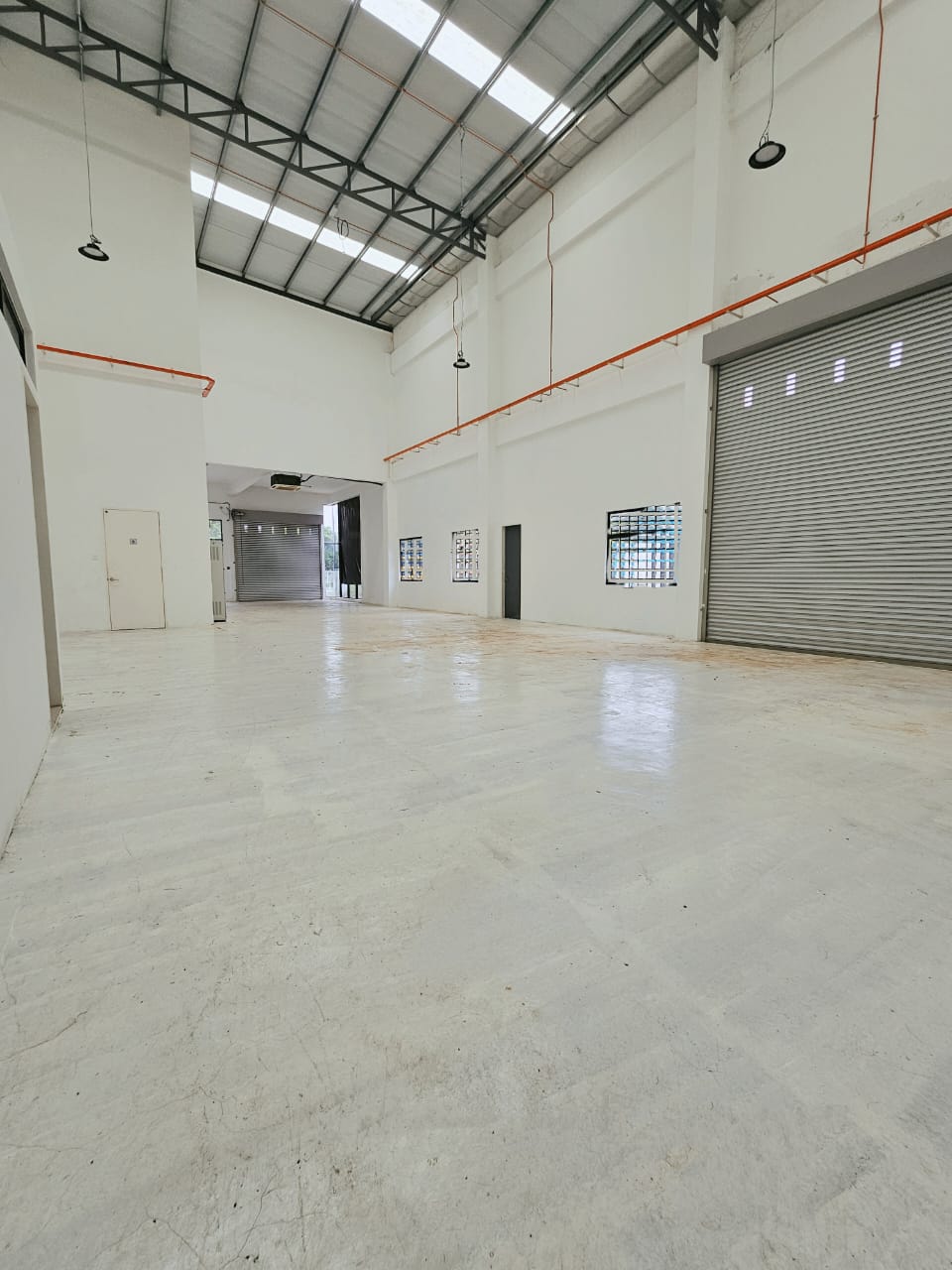
Johor factory selection: start with the occupier
The following framework is our practical interpretation of the news, rather than a rental forecast. Begin with a written operating brief: what the company makes or stores, how goods enter and leave, which equipment must be installed, and when the premises must be usable.
For an owner-occupier, the production process should guide the search. For a property investor, the equivalent exercise is to identify a plausible tenant profile and check whether the unit meets that tenant’s needs. A building that looks attractive in photographs can still require expensive alterations.
| Operating requirement | What to check at the property |
|---|---|
| Machinery or production equipment | Usable floor area, floor loading and installation access |
| Regular truck movements | Approach roads, turning space, loading arrangement and gate clearance |
| Power-intensive activity | Existing supply and documented capacity for the intended equipment |
| Storage and distribution | Clear height, loading access and separation of goods from office space |
| Expansion | Available adjacent space and the practicality of future alterations |
A checklist for comparing Johor factory listings
Browse Johor property listings and make a shortlist across locations such as 士乃 Senai, 古来 Kulai and 巴西古当 Pasir Gudang. These links are starting points for a search, not a ranking of expected investment returns.
Before deciding on a unit, record:
- Actual journey requirements: test travel from the building to the company’s suppliers, customers and delivery points.
- Usable space: distinguish land area, built-up area and the area available for operations.
- Technical fit: request relevant building information and assess equipment, loading and utility needs with suitable specialists.
- Use and documentation: check that the proposed activity fits the property’s permitted use and relevant approvals.
- Time and cost to occupy: account for alterations, utility work and handover conditions alongside the asking price.
- Demand evidence: for an investment purchase, compare credible tenant enquiries and comparable transactions, rather than relying only on project announcements.
This process also gives the property agent a clearer brief. A requirement such as “production space with documented power capacity and frequent truck access” is more useful than “a factory near the JS-SEZ.”
Frequently asked questions
Does RM59.4 billion mean Johor factory prices will rise?
No. It is an approved-investment total, not a property-price index or completed-transaction figure. Individual factory values still depend on the building, location, condition, available supply and occupier demand. A price forecast requires evidence beyond the approval headline.
Should a business search only within the JS-SEZ?
A business should first assess its operating needs, then check the location and any programme requirements relevant to its project. The property’s suitability, supplier connections and occupation timetable remain important even when the regional policy context is favourable.
What should I send an agent before arranging a viewing?
Send your intended activity, required usable space, equipment and utility needs, vehicle movements, preferred locations, budget and move-in date. Identify which requirements are essential and which are flexible. That helps avoid viewings of buildings that cannot support the operation.
If you are planning a factory purchase or relocation, contact Factory-Shop.my with that operating brief. Start the discussion with the business requirements, then use the latest investment news to add context to the location comparison.


加入讨论